SouthPing: homemade probes head to the end of the Earth
SouthPing — student-built weather probes for the Drake Passage and King George Island.
A school project is building three satellite weather probes and sending them south with an expedition: two to Antarctic research stations, one to drift across the Drake Passage. The vessel departs Ushuaia on 15 November 2026.
The team
🔧 Students and mentors
A student lead in Texas, a prospective second student in St. Petersburg, and a project lead — a parent of one of the students. One scientific advisor so far: an engineer and electronics instructor. Two school science teachers are still to be recruited.
🎓 Two schools and a university
Students in Texas (USA) and St. Petersburg (Russia), and a university that runs Antarctic expeditions and has offered to cooperate — the agreement is not signed yet. The project is bilingual and international.
🌐 Everything is open
The drawings, schematics, code and data are published openly: the instruments can be rebuilt by anyone, and the data are free to use. Code is Apache-2.0, everything else CC-BY-4.0 — please credit SouthPing.
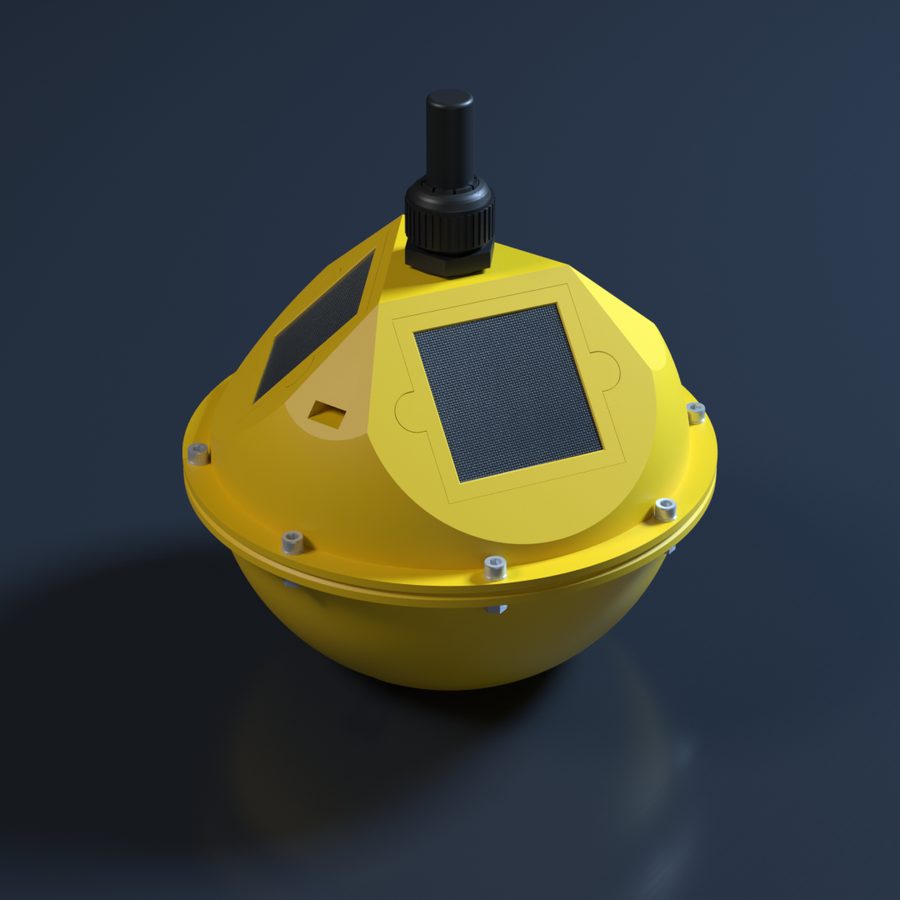
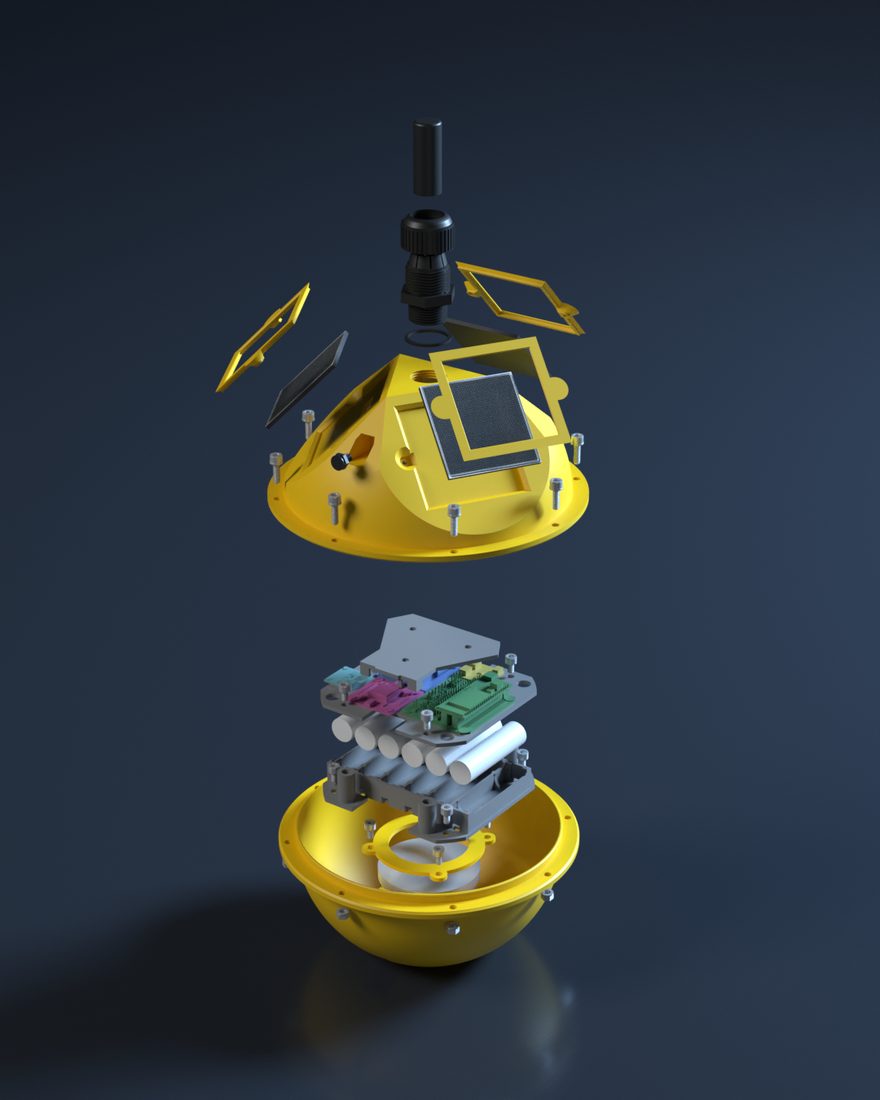
A Ø200 mm sphere buoy
3D-printed hull — a sealed, bonded sphere weighing ≈ 2 kg
3 solar panels in the crown — charging in any orientation
Iridium satellite modem — a link from anywhere on Earth, no cell towers needed
Sensors: air pressure, temperature and humidity, water temperature, GPS
6 Li-ion cells — months of operation with no sun at all
A reading every hour, batched and sent home over the satellite link
Three probes — one design
LAND-1beside Bellingshausen Station (King George Island) — the reference comparison
LAND-2targeted at Escudero Station (Chile), if INACH accepts — backup and second reference
SEAreleased mid-Drake Passage — drifts with the current
3probes on the expedition
24readings per day
4satellite sessions per day (the drifting buoy)
~4–12 monthson battery alone, depending on conditions
15 Nov 2026expedition departs Ushuaia
Four goals
Four scientific questions, from the safe one to the bold one — each builds on the one before.
ANCHOR
Can a homemade instrument be trusted?
We place our probe next to a professional Antarctic weather station for a whole season. Every hour, both measure the same air — so we learn exactly where we err and by how much. After that the probe is no longer a gadget: it is an instrument with a known accuracy.
GAP
What is the pressure where nobody is measuring?
The Drake Passage is one of the least-observed places on the planet, and air pressure there is precisely what weather forecasts lack most. Our buoy drifts through it, reporting 4 times a day — data points that otherwise simply don't exist.
GRADIENT
Measure the wind — with no wind sensor
Wind is driven by pressure differences. One barometer on shore, one at sea — and the difference between them reveals the wind over the passage: a wind speed from two barometers and zero anemometers. Then we check whether the world's weather model agrees.
DRIFT
Ride the current to map the ocean
An underwater "parachute" couples the buoy to the water — its GPS track becomes a map of the strongest current on Earth. A water thermometer catches the boundaries between cold and warm water: crossing a front shows up in two independent signals at once.